
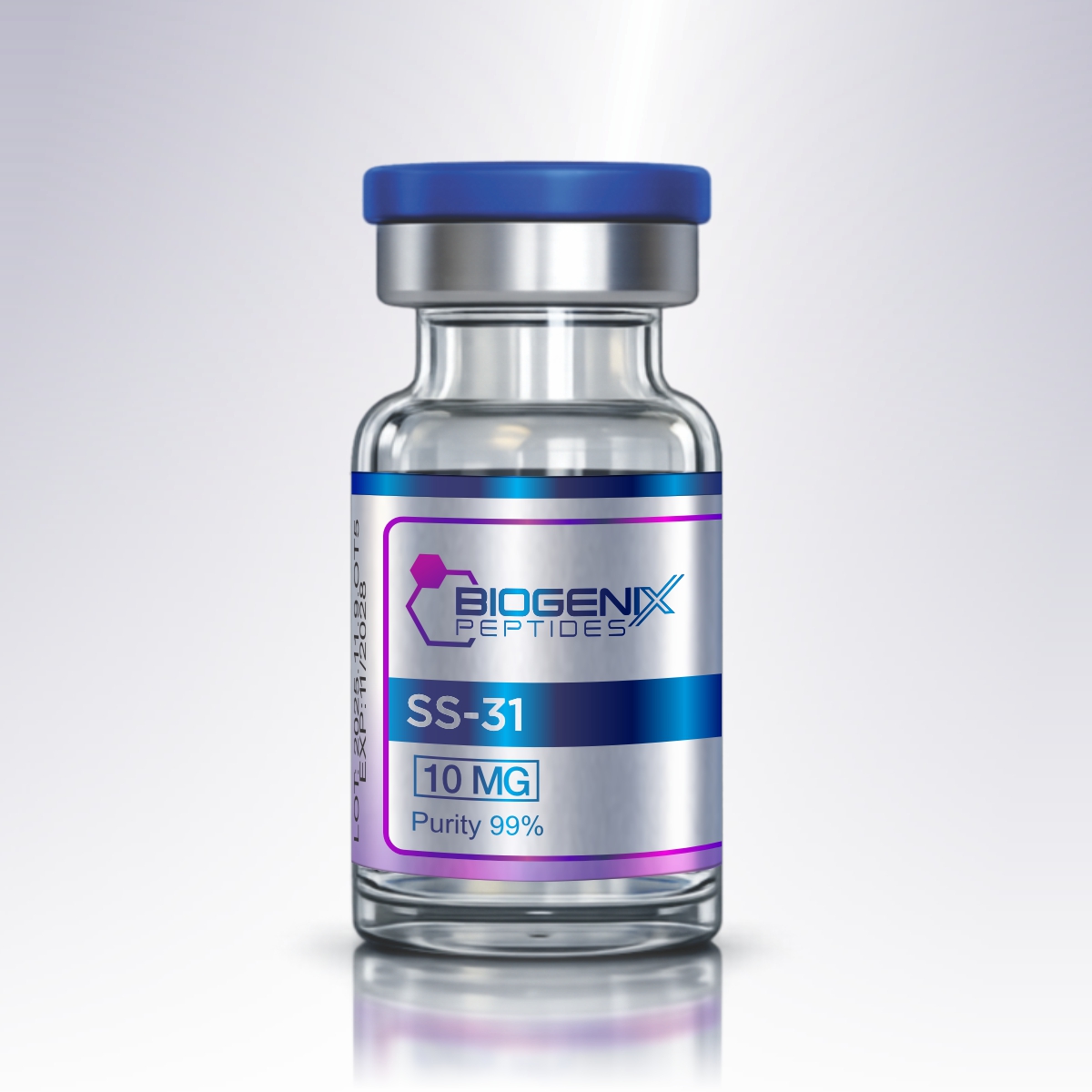
SS-31 10mg
$116.00
1000 in stock
🔥 Exclusive Crypto Offer
Get an INSTANT 15% DISCOUNT when you pay with Bitcoin, Ethereum, Dogecoin, Bitcoin Cash, XRP, Solana, or USDT.
⚡ Don't have crypto? Buy it here in 5 minutes with easy guidance.
💡 Pro Tip: You can also pay with cryptocurrency using your verified Cash App or PayPal account for a fast and secure checkout!
SS-31 (Elamipretide) — Research Overview
Introduction
SS-31 (also known as Elamipretide, MTP-131, or Bendavia) is a synthetic mitochondria-targeting tetrapeptide designed to selectively bind and stabilize cardiolipin on the inner mitochondrial membrane. Research has focused heavily on its potential to improve ATP production, reduce oxidative stress, support mitochondrial structure, and enhance cellular resilience in high-demand or aging tissues.
Its unique intracellular mechanism distinguishes SS-31 from traditional receptor-based peptides, positioning it as a leading molecule in mitochondrial biology, metabolic research, cardiovascular studies, neuroprotection, and muscle-performance science.
Chemical Characteristics
CAS #: 736992-21-5
Formula: C32H49N9O5
M.W.: 639.8 g/mol
Mechanisms of Action
1. Cardiolipin Binding & Mitochondrial Stabilization
SS-31 selectively binds cardiolipin within the inner mitochondrial membrane, helping to stabilize electron-transport chain supercomplexes, reduce electron leakage, maintain membrane curvature, and improve oxidative phosphorylation efficiency.
2. Reduction of Mitochondrial ROS
By optimizing ETC function, SS-31 may lower mitochondrial ROS production through improved electron flow, stabilized membrane potential, and prevention of cardiolipin peroxidation.
3. Enhancement of ATP Production
SS-31 is widely studied for its potential to improve ATP output by supporting efficient ETC activity, optimizing mitochondrial respiration, and enhancing energy availability during cellular stress.
4. Anti-Apoptotic & Cytoprotective Actions
Research indicates SS-31 may reduce release of pro-apoptotic factors, improve mitochondrial resilience under injury, and enhance cell survival in stressed, inflamed, or oxygen-deprived tissues.
Research Applications
1. Mitochondrial Dysfunction & Aging
SS-31 is a major molecule in mitochondrial-aging research due to its potential to restore membrane potential, improve bioenergetic capacity, reduce oxidative stress, and normalize mitochondrial dynamics.
2. Cardiovascular Research
Cardiac muscle is highly mitochondrial, making SS-31 a strong research candidate for ischemia/reperfusion injury, cardiac energetics, endothelial dysfunction, and ATP depletion in stressed cardiac tissue.
3. Neuroprotection & Cognitive Health
SS-31 is studied in neural models for its ability to reduce neuronal oxidative stress, support mitochondrial transport, promote synaptic resilience, and protect against age-related neurodegeneration.
4. Skeletal Muscle Function & Performance
Research indicates SS-31 may influence muscle fatigue resistance, exercise-induced mitochondrial stress, age-related muscle decline, and ATP availability during physical activity.
5. Systemic Metabolic & Organ Protection
SS-31 has been evaluated in studies of kidney ischemia, liver oxidative stress, diabetic mitochondrial dysfunction, and whole-body energy imbalance.
Practical Considerations in Research Models
- Rapidly permeates cells and accumulates in mitochondria
- Effects are dose-dependent and time-dependent
- Common endpoints include ATP output, ROS levels, membrane potential, and mitochondrial stability
- Outcomes vary by tissue type, metabolic stress level, and mitochondrial density
Conclusion
SS-31 (Elamipretide) is a specialized mitochondrial-targeting tetrapeptide extensively studied for enhancing ATP production, reducing oxidative stress, stabilizing mitochondrial membranes, and improving cellular resilience. Its cardiolipin-binding mechanism sets it apart from conventional peptides, making it a leading compound in research focused on aging, metabolic balance, cardiac energetics, neuroprotection, and muscle performance.
Related products
Cognitive
Featured

Featured
GLP-1
Featured
Cognitive
Cognitive
Longevity