
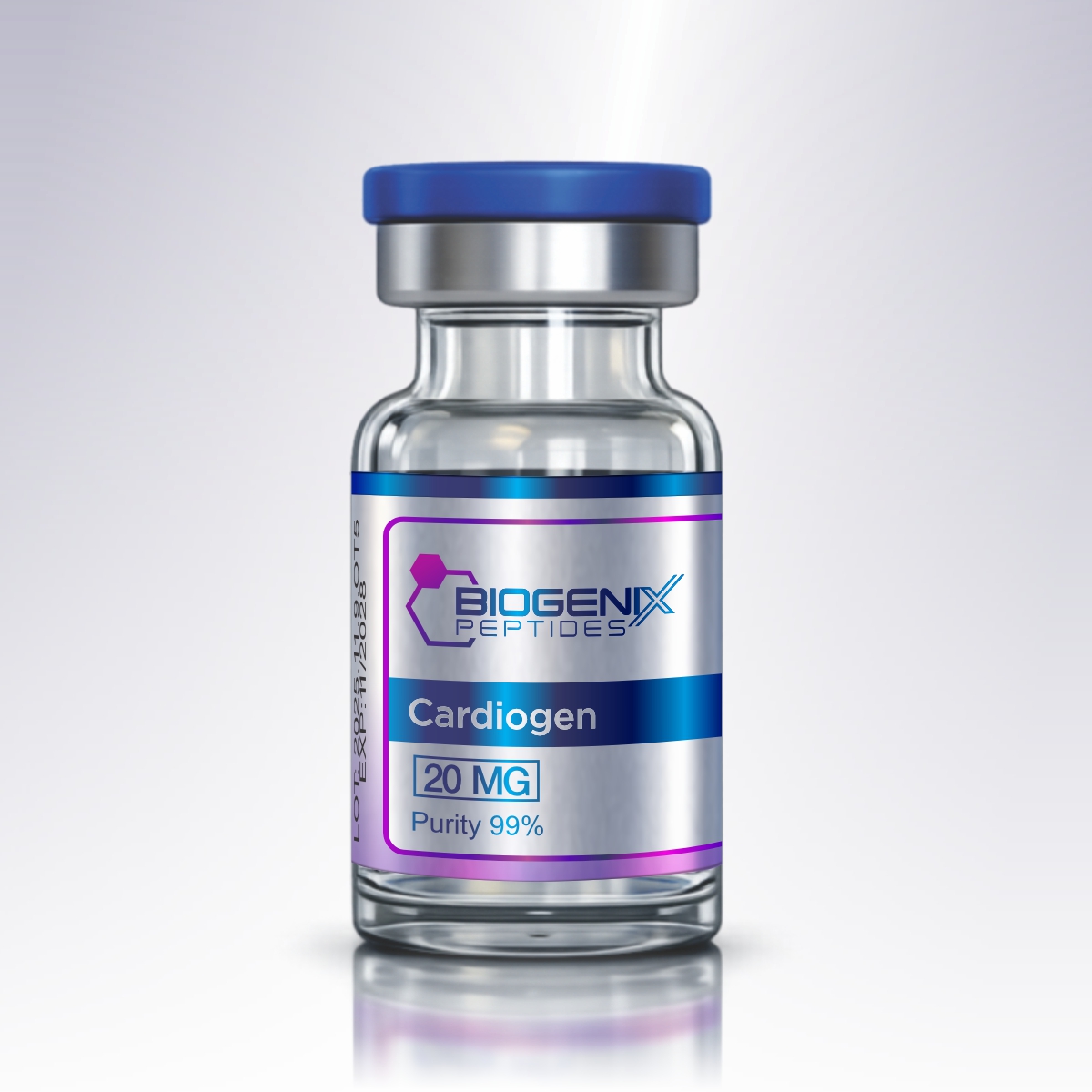
Cardiogen 20mg
$68.00
1000 in stock
🔥 Exclusive Crypto Offer
Get an INSTANT 15% DISCOUNT when you pay with Bitcoin, Ethereum, Dogecoin, Bitcoin Cash, XRP, Solana, or USDT.
⚡ Don't have crypto? Buy it here in 5 minutes with easy guidance.
💡 Pro Tip: You can also pay with cryptocurrency using your verified Cash App or PayPal account for a fast and secure checkout!
Cardiogen (Bioregulator) — Research Overview
Introduction
Cardiogen is a synthetic regulatory peptide studied for its potential roles in supporting cardiac tissue health, cellular recovery, and stress-response modulation. It belongs to a class of short bioregulatory peptides that may help maintain balanced gene expression and protein synthesis within heart cells.
Research interest in Cardiogen centers around its possible influence on cardiomyocyte function, energy metabolism, microcirculation, and inflammatory regulation—all of which are critical to heart-tissue stability under metabolic, environmental, or age-related stress.
Chemical Characteristics
CAS #: N/A
Molecular Formula: C18H31N7O9
Molecular Weight: 489.5 g/mol
Mechanisms of Action
1. Gene-Expression Modulation
Cardiogen is researched for its ability to modulate gene pathways related to cardiac protein synthesis, cellular stress adaptation, mitochondrial function, and structural remodeling. These effects may help normalize disrupted signaling in stressed or aging heart tissue.
2. Support of Cardiomyocyte Metabolism
Studies suggest Cardiogen may support efficient energy utilization, help maintain mitochondrial output, and reduce metabolic strain—key factors in cardiac endurance and resilience.
3. Anti-Inflammatory & Cytoprotective Modulation
Cardiogen may influence inflammatory pathways by reducing pro-inflammatory signaling, enhancing cellular defense responses, and helping stabilize tissue under oxidative or metabolic challenge.
4. Microcirculatory & Endothelial Support
Research indicates potential benefits for capillary microcirculation, endothelial stability, and tissue oxygenation—components essential for optimal cardiac performance and recovery.
Research Applications
1. Cardiac Tissue Support
Cardiogen is explored in studies involving cardiomyocyte resilience, structural maintenance, and recovery following metabolic stress.
2. Mitochondrial & Energy Metabolism Research
Due to the heart’s constant energy demand, Cardiogen’s potential influence on mitochondrial function and ATP balance has become a significant research focus.
3. Inflammatory & Stress-Response Regulation
Research includes examining Cardiogen’s role in oxidative-stress balance, inflammation reduction, and activation of tissue-repair pathways.
4. Vascular & Microcirculatory Studies
Cardiogen is evaluated for its potential relevance in microvascular perfusion, endothelial integrity, and overall heart-tissue oxygenation.
Practical Considerations in Research Models
- Effects may require multi-day or multi-week exposure depending on the model
- Often studied in settings involving cardiac stress or metabolic imbalance
- Monitoring typically includes mitochondrial output, inflammation markers, and cardiac-function parameters
Conclusion
Cardiogen is a bioregulatory peptide investigated for its potential to support cardiac tissue, balance cellular stress responses, enhance metabolic efficiency, and strengthen microvascular dynamics. Its regulatory profile has made it a candidate of interest in cardiac health, mitochondrial research, and tissue-repair studies.
Related products
Longevity
Aesthetic
Immune
Bioregulator
GLP-1
Metabolic
Featured
Longevity