
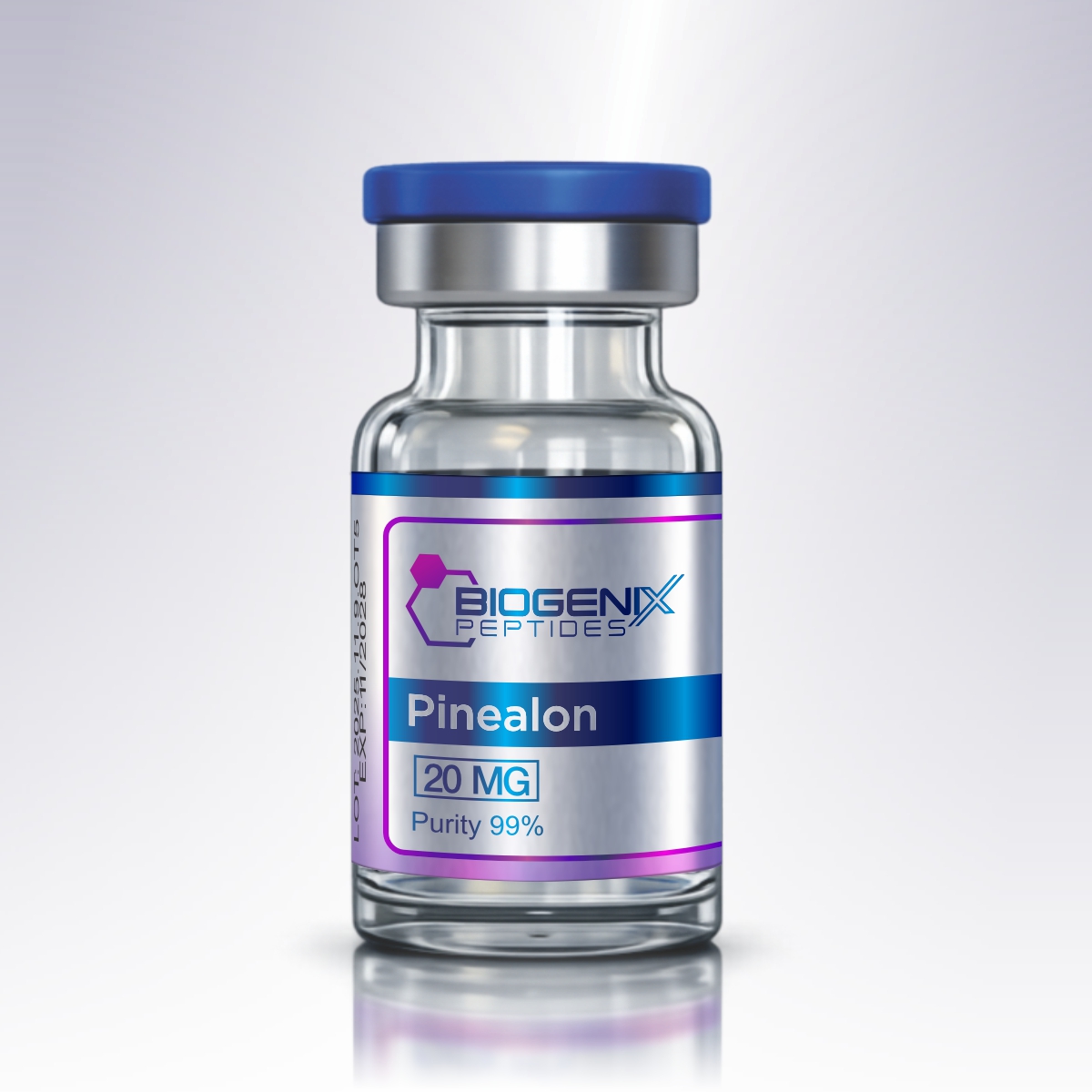
Pinealon 20mg
$72.00
1000 in stock
🔥 Exclusive Crypto Offer
Get an INSTANT 15% DISCOUNT when you pay with Bitcoin, Ethereum, Dogecoin, Bitcoin Cash, XRP, Solana, or USDT.
⚡ Don't have crypto? Buy it here in 5 minutes with easy guidance.
💡 Pro Tip: You can also pay with cryptocurrency using your verified Cash App or PayPal account for a fast and secure checkout!
Pinealon (Bioregulator) — Research Overview
Introduction
Pinealon is a short synthetic bioregulatory peptide studied for its potential roles in neuroprotection, cognitive support, and cellular stress regulation. It belongs to a class of bioregulatory peptides derived from naturally occurring protein fragments believed to help maintain balanced gene expression and metabolic stability within neural tissues.
Research interest in Pinealon focuses on its ability to support memory performance, stress resilience, oxidative balance, and healthy cellular aging—particularly within the brain and central nervous system.
Chemical Characteristics
CAS #: 175175-23-2
Molecular Formula: C15H26N6O8
Molecular Weight: 418.407 g/mol
Mechanisms of Action
1. Modulation of Gene Expression in Neural Cells
Pinealon is evaluated for its potential to influence gene pathways associated with neuronal metabolism, protein synthesis, adaptive stress signaling, and neurotrophic-factor activity. These mechanisms play key roles in maintaining healthy brain function and cellular stability.
2. Reduction of Oxidative Stress
Research models suggest Pinealon may help support antioxidant defense systems, reduce reactive oxygen species (ROS), improve redox balance, and protect neurons from oxidative damage—making it a strong candidate in stress-related and aging-related neural research.
3. Neuroprotective & Cognitive-Support Effects
Pinealon is studied for its potential roles in supporting memory, learning, cognitive performance, and neural stability during periods of stress or metabolic demand.
4. Mitochondrial & Metabolic Support
Due to its compact structure and regulatory activity, Pinealon may help support mitochondrial efficiency, improve energy balance, and enhance cellular tolerance to metabolic stress.
Research Applications
1. Cognitive & Memory Research
Pinealon is commonly explored for its potential influence on short-term memory, learning adaptability, neuroplasticity, and cognitive performance under stress.
2. Neuroprotection & Aging Research
Studies investigate Pinealon’s potential to reduce oxidative neurodamage, support neuron survival, and protect against age-related cognitive decline.
3. Stress-Response Modulation
Pinealon may help regulate stress-induced neural signaling and maintain CNS homeostasis during high-demand or high-stress conditions.
4. Mitochondrial & Metabolic Health
Its regulatory profile connects Pinealon to research involving mitochondrial function, systemic energy balance, and anti-aging metabolic pathways.
Practical Considerations in Research Models
- Often evaluated across 2–6 week research protocols
- Effects depend on baseline oxidative and metabolic stress conditions
- Common outcomes include cognitive markers, oxidative biomarkers, and neuronal viability
- Small molecular size allows efficient tissue penetration in model systems
Conclusion
Pinealon is a compact neuroregulatory peptide studied for its potential to support cognitive function, promote neuronal resilience, reduce oxidative stress, and maintain balanced gene expression in neural tissues. Its protective and stabilizing profile makes it a strong candidate in research involving cognition, stress adaptation, metabolic health, and cellular aging.
Related products
Longevity
Cognitive
Cognitive

Aesthetic
Cognitive
Longevity
Cognitive
Longevity